Introduction :
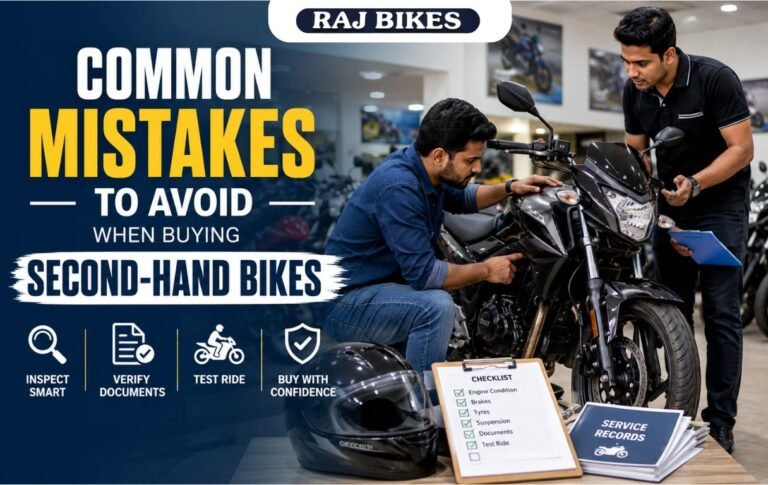
Purchasing a secondhand motorcycle saves you money while still providing you with an efficient mode of transport. But choosing right needs some checking. A bike might be eye-catching from the outside, but underlying concerns could turn into cost-intensive repairs down the road. This is the reason, you should scrupulously check the bike before finalising any kind of purchase. This is the guide to check any used bike before you buy and confidently have made up your mind.
1. Check the Bike’s Documents :
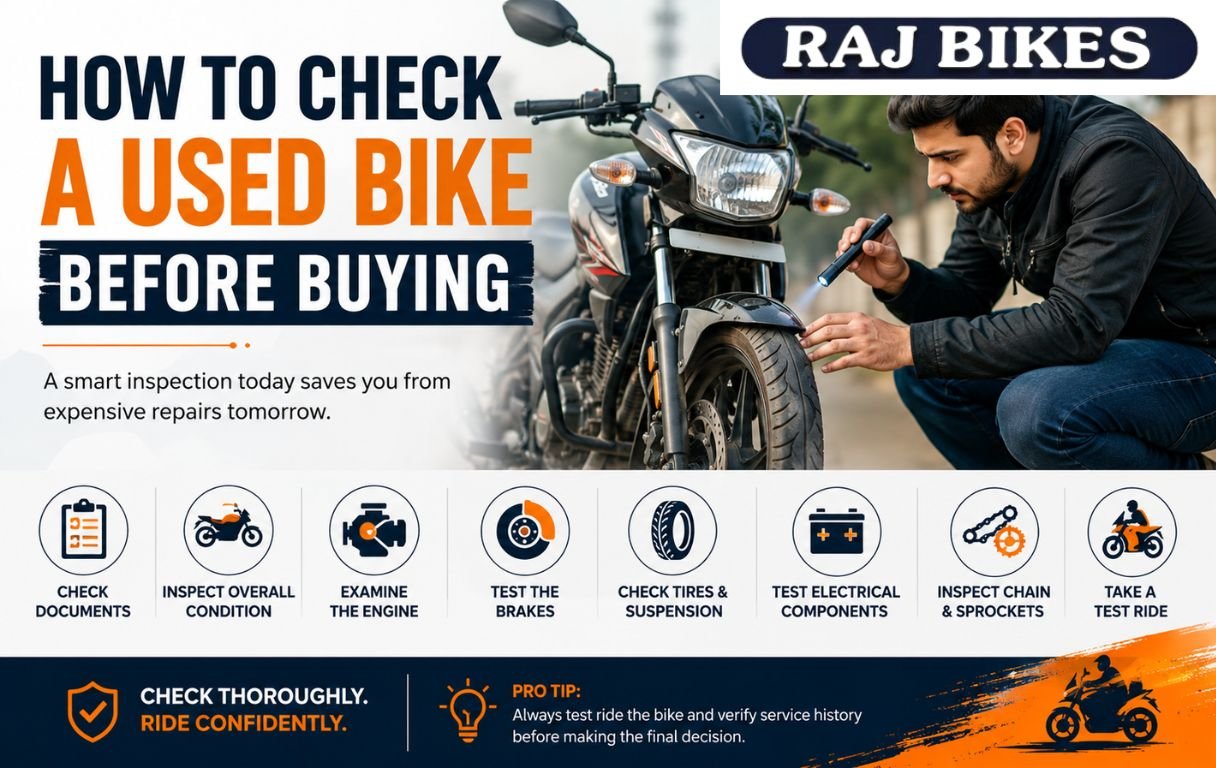
In the first place, verify every one of those records that are required. With proper paperwork proving ownership, you will also not run into legal issues.
Important documents include :
a) Registration Certificate (RC)
b) Insurance Certificate
c) Pollution Under Control (PUC) Certificate
d) Service Records
e) Road Tax Documents
Also verify the motorcycle’s chassis number and engine number with what is written in the RC book.
2. Inspect the Overall Condition :
Now take a very close look at the rest of the bike. Small scratches are common, but large dents or damaged panels might suggest past accidents or neglect.
Pay attention to :
a) Fuel tank condition
b) Body panels
c) Paint quality
d) Rust on metal parts
e) Signs of repairs or repainting
Next, checking the frame closely is important since structural damage can influence the performance and safety of the bike.
3. Examine the Engine :
The Engine is the Murder of the two wheeler. Hence, verifying its condition is still important.
Start the bike and observe :
a) Unusual noises
b) Excessive vibration
c) Smoke from the exhaust
d) Smooth idling
Blue or black smoke is usually an indication of trouble up at the engine. By the way, listen for knocking that could be internal wear.
4. Check the Odometer Reading :
This is the odometer to show us how many miles were traveled on the bike. You should never pay attention to mileage alone, while it’s useful information too.
For example :
a) In particular, low mileage with poor condition might indicate dealer tampering.
b) However, high miles with a good service history can still provide great value.
So you should correlate the odometer reading with its condition and service history.
5. Test the Braking System :
The braking system is one of the most critical systems in a vehicle.
Check :
a) Front and rear brakes
b) Brake pads
c) Brake fluid levels
d) Disc or drum condition
Ensure the brakes function without noise and respond quickly during a test ride.
6. Inspect the Tires :
Tires can tell you a great deal about a bike’s checkered past.
Look for :
a) Uneven wear patterns
b) Cracks on sidewalls
c) Adequate tread depth
d) Matching tire brands
Bald tires Limits in grip and raising fresh tire costs. So when you price it drive it keeping in mind the tire condition.
7. Check the Suspension :
It is comfortable and stable provided the suspension system is kept in healthy condition.
Check the movement of front forks and rear suspension by pressing them. Also check for oil leaks by the suspension parts.
Additionally, inspect the suspension carefully. If it feels too stiff or too soft, it may need repairs. Therefore, checking the suspension helps ensure a safe and comfortable ride.
8. Test the Electrical Components :
Today, modern motorcycles rely a lot on electricals.
Verify the operation of :
a) Headlights
b) Tail lights
c) Turn indicators
d) Horn
e) Electric starter
f) Instrument cluster
Also check that battery fires up the bike easily.
9. Inspect the Chain and Sprockets :
Here, the quality of chain and sprockets directly impacts performance.
Check for :
a) Excessive looseness
b) Rust
c) Uneven wear
d) Damaged teeth on sprockets
An in good condition chain shows an aware ownership and ongoing maintenance.
10. Take a Test Ride :
Finally, and most importantly, never skip the test ride when buying a used bike. Not only does a test ride help you assess the bike’s performance, but it also allows you to identify potential issues that may not appear during a visual inspection. Furthermore, you can evaluate the engine response, braking efficiency, gear shifting, and overall riding comfort. Therefore, taking a thorough test ride plays a crucial role in making a smart and confident used bike purchase.
During the ride, evaluate :
a) Engine performance
b) Gear shifting
c) Brake response
d) Steering control
e) Rider comfort
Also, look out for abnormal noise or vibrations during the ride.
Tips for Negotiating the Price :
When the inspection is complete, negotiate a decent price using any identified problems.
For example :
a) Worn tires
b) Weak battery
c) Brake repairs
d) Pending service requirements
But don’t just focus on price. Rather look after the bike health and longevity.
Conclusion :
Buying a used bike requires patience and careful consideration. First, verify all the necessary documents to ensure a hassle-free purchase. Next, inspect the engine thoroughly and check the wheels and tires for signs of wear and tear. In addition, test the brakes to confirm they work efficiently and safely. Most importantly, take a detailed test ride to evaluate the bike’s overall performance and comfort.
Furthermore, a comprehensive inspection helps you identify potential issues, negotiate a fair price, and choose a bike that offers long-term reliability. Therefore, by following these essential steps before buying a used bike, you can avoid costly mistakes and enjoy a safer, smarter, and more confident purchase.