Buying a second-hand bike is one of the smartest ways to own a reliable two-wheeler without stretching your budget. Whether you’re a student, a daily commuter, or a first-time buyer, a pre-owned motorcycle offers excellent value for money. However, many buyers rush into a purchase without checking important details. As a result, they often face expensive repairs, legal complications, or unexpected maintenance costs.
Fortunately, you can avoid these problems with the right knowledge and a careful inspection. In this guide, you’ll discover the most common mistakes people make when buying a second-hand bike and learn practical tips to help you choose the right one with confidence.
1. Skipping the Service History
First and foremost, always check the bike’s service history. Regular maintenance records show how well the previous owner cared for the motorcycle. A bike with a complete service history usually performs better and lasts longer.
What to Check
- Regular service intervals
- Engine oil change records
- Major repairs or replacements
- Authorized service center invoices
- Battery and tyre replacement history
By reviewing these records, you can identify potential issues before making a purchase.
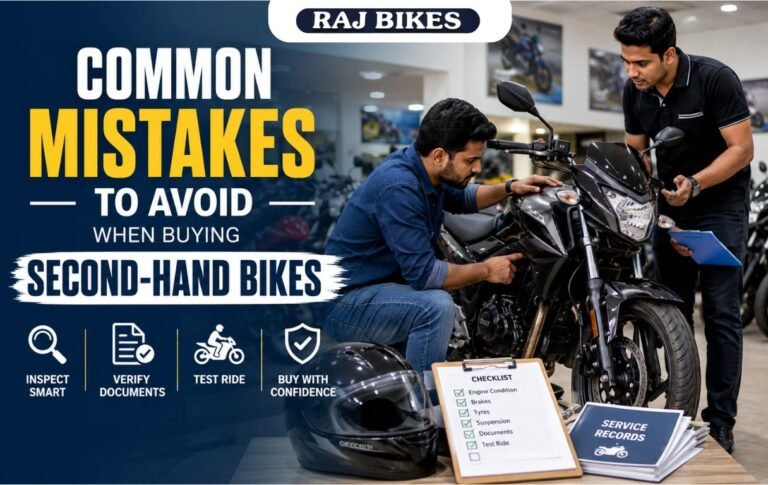
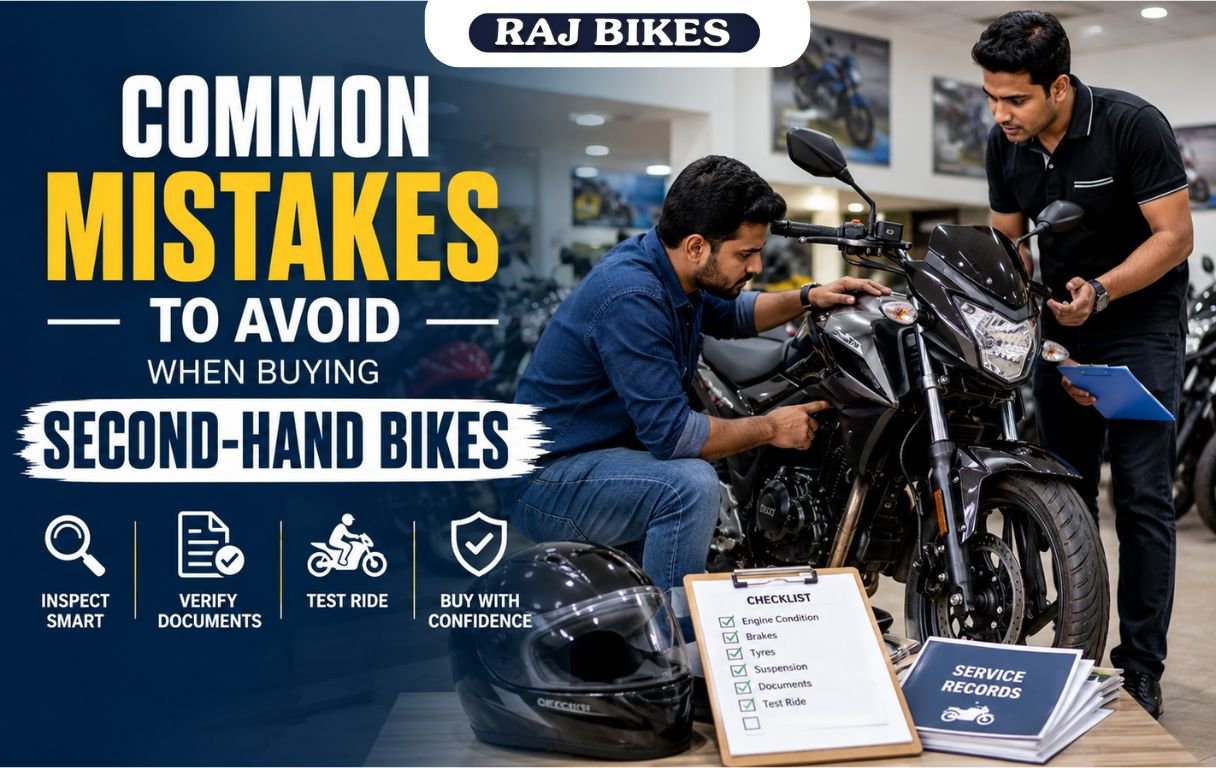
2. Ignoring the Physical Condition
Next, inspect the bike carefully instead of relying only on photos or the seller’s claims. A detailed inspection helps you identify hidden damage and avoid costly surprises later.
Inspect These Areas
- Body panels for dents and scratches
- Rust on the frame and exhaust
- Tyre condition and tread depth
- Brake pads and brake discs
- Chain and sprocket wear
- Front and rear suspension
- Fuel tank for leaks or corrosion
In addition, inspect the paint carefully. Fresh paint or uneven finishing may indicate previous accident repairs.
3. Overlooking the Engine’s Performance
The engine determines the overall health of the motorcycle. Therefore, never ignore its condition.
Start the bike and listen carefully. A healthy engine should start easily and run smoothly without unusual sounds.
Look for These Warning Signs
- Excessive smoke from the exhaust
- Oil leakage
- Strange knocking sounds
- Poor acceleration
- Rough idling
- Excessive vibration
If you notice any of these issues, consider another option before making your final decision.
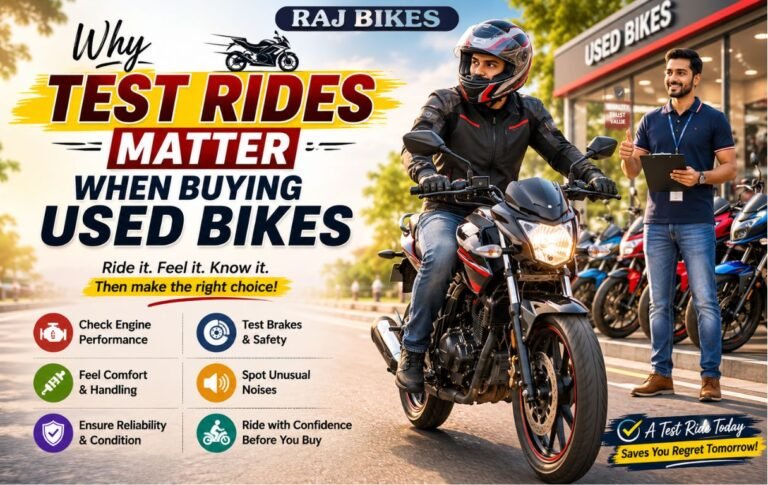
4. Missing the Test Ride
Many buyers inspect the bike but skip the test ride. However, a short ride reveals problems that you may not notice while the bike remains stationary.
During the test ride, check:
- Smooth gear shifting
- Brake response
- Clutch operation
- Steering stability
- Suspension comfort
- Engine pickup
- Riding comfort
If the seller refuses a test ride without a genuine reason, treat it as a red flag.
5. Forgetting to Verify Important Documents
Even if the bike looks perfect, never purchase it without verifying the documents. Proper paperwork protects you from future legal issues.
Verify These Documents
- Original Registration Certificate (RC)
- Valid Insurance Certificate
- Pollution Under Control (PUC) Certificate
- Road Tax details
- Service records
- Seller’s identity proof
Most importantly, match the engine number and chassis number with the RC to confirm authenticity.
6. Ignoring the Accident History
Before finalizing your purchase, ask whether the bike has been involved in an accident. Even after repairs, major accidents can affect the bike’s structural strength.
Watch for:
- Bent front forks
- Misaligned handlebars
- Weld marks on the frame
- Uneven paintwork
- Replaced body panels
These signs may indicate previous damage.
7. Not Checking for Odometer Tampering
Unfortunately, some sellers reduce the odometer reading to increase the bike’s resale value. Therefore, don’t rely on mileage alone.
Instead, compare the mileage with the bike’s overall condition.
Common Signs
- Worn foot pegs
- Faded handle grips
- Damaged seat cover
- Excessively worn brake pedals
- Service records with inconsistent mileage
If something doesn’t add up, investigate further before buying.
8. Paying Without Comparing Prices
Another common mistake involves buying the first bike you like. Instead, compare similar models before making your decision.
Consider these factors:
- Bike model
- Manufacturing year
- Kilometres driven
- Overall condition
- Service history
- Market resale value
As a result, you’ll understand whether the asking price is reasonable.
9. Delaying the Ownership Transfer
After purchasing the bike, complete the ownership transfer immediately. Delaying this process may create legal and insurance problems later.
Remember to:
- Transfer the RC ownership
- Update the insurance policy
- Complete Form 29 and Form 30 (where applicable)
- Keep copies of every document
- Obtain a sale agreement
This simple step protects both the buyer and the seller.
10. Choosing Appearance Over Performance
Finally, don’t judge a bike by its appearance alone. Attractive paint, stylish stickers, or aftermarket accessories cannot guarantee good mechanical condition.
Instead, focus on:
- Engine health
- Service history
- Brake condition
- Suspension performance
- Genuine documents
- Overall maintenance
A mechanically sound bike will always provide better value than one that only looks attractive.
Smart Tips for Buying a Second-Hand Bike
To make a confident purchase, follow these practical tips:
- Buy from a trusted and reputed dealer.
- Inspect the bike in daylight.
- Take a complete test ride.
- Verify all documents carefully.
- Check the service history.
- Compare prices before negotiating.
- Ask questions about previous ownership.
- Avoid rushing your decision.
Following these simple steps will help you choose a reliable bike and reduce the risk of unexpected expenses.
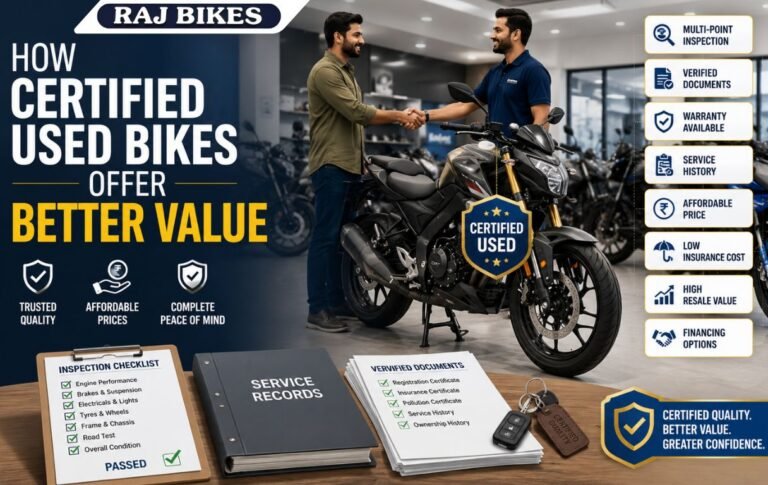
Why Buying from a Trusted Dealer Makes a Difference
A trusted second-hand bike dealer offers greater peace of mind. Reputed dealers inspect every motorcycle, verify ownership documents, and provide transparent pricing. Many also service the bike before delivery, allowing buyers to purchase with greater confidence.
Moreover, established dealers often maintain quality standards that individual sellers may not follow. As a result, you reduce the risk of buying a bike with hidden mechanical or legal issues.
Conclusion
Buying a second-hand bike doesn’t have to be complicated. Instead, focus on careful research, a detailed inspection, and complete document verification. By avoiding these common mistakes, you can invest in a reliable motorcycle that delivers excellent performance and long-term value.
Ultimately, patience and proper planning make all the difference. Compare your options, ask the right questions, and never rush the buying process. When you choose wisely, your second-hand bike can provide years of dependable and enjoyable riding.