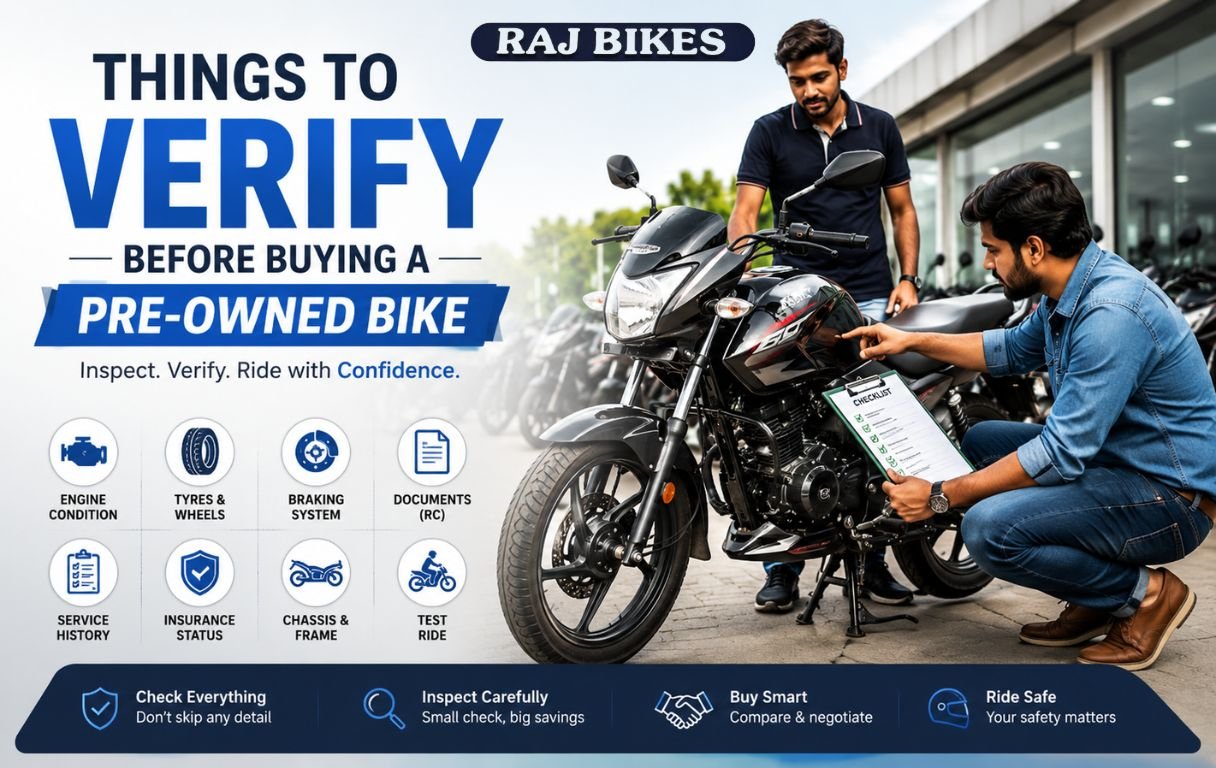
Buying a pre-owned bike is a smart way to save money while owning a reliable two-wheeler. However, making a quick decision without checking the bike thoroughly can lead to costly repairs, unexpected maintenance, and legal issues. Therefore, you should inspect every important detail before finalizing your purchase.
A well maintained used bike offers excellent value, but only when you verify its documents, service history, and overall condition. In this guide, you’ll discover the most important things to verify before buying a pre-owned bike. As a result, you can make a confident purchase and avoid unnecessary risks.
1. Verify the Bike’s Registration Documents
Start by checking the Registration Certificate (RC) to confirm that the seller is the legal owner of the bike. Next, match the owner’s name with a valid government issued ID. Also, compare the engine number and chassis number with the details mentioned in the RC.
Additionally, check whether the bike has any outstanding loans, pending fines, or legal disputes. This simple verification can save you from ownership issues in the future.
2. Check the Bike’s Service History
Next, ask for the complete service records. Regular maintenance shows that the previous owner took good care of the bike. Moreover, service invoices help you verify timely oil changes, brake servicing, chain maintenance, and major repairs.
A complete service history also increases your confidence in the bike’s overall condition.
3. Inspect the Engine Condition
The engine is the heart of every motorcycle. Therefore, start the bike and listen carefully for unusual noises such as knocking, rattling, or excessive vibrations. Then, inspect the engine for oil leaks or visible damage.
During the test ride, make sure the engine starts easily and delivers smooth acceleration. If the bike struggles to start or produces excessive smoke, consider another option.
4. Examine the Chassis and Frame
Inspect the frame carefully for dents, cracks, rust, or welding marks. These signs often indicate previous accidents or structural damage.
Likewise, check whether the handlebars remain straight and whether the wheels align properly. A damaged frame can reduce both riding comfort and overall safety.
5. Inspect the Tyres and Wheels
Your tyres play a major role in road safety. Therefore, check the tyre tread depth and inspect the tyres for uneven wear, cracks, or cuts.
In addition, examine the alloy wheels or rims for bends, dents, or damage. Worn tyres or damaged wheels can increase your maintenance costs immediately after purchase.
6. Test the Braking System
Reliable brakes help you ride safely. Therefore, test both the front and rear brakes during your inspection and test ride. The brakes should respond quickly without producing unusual sounds or vibrations.
Furthermore, inspect the brake discs, brake pads, and brake fluid level whenever applicable. Well-maintained brakes improve both safety and riding confidence.
7. Check the Suspension
A healthy suspension system provides better comfort and handling. Therefore, press down on both the front and rear suspension to check for smooth movement.
During the test ride, observe how the bike handles bumps and rough roads. If you notice excessive bouncing or unusual noises, the suspension may require repairs.
8. Verify the Electrical Components
Next, inspect every electrical component carefully. Check the headlights, tail lights, indicators, horn, instrument cluster, electric starter, and battery.
Also, test every switch to ensure proper operation. Although electrical problems may seem minor at first, they often become expensive if you ignore them.
9. Take a Proper Test Ride
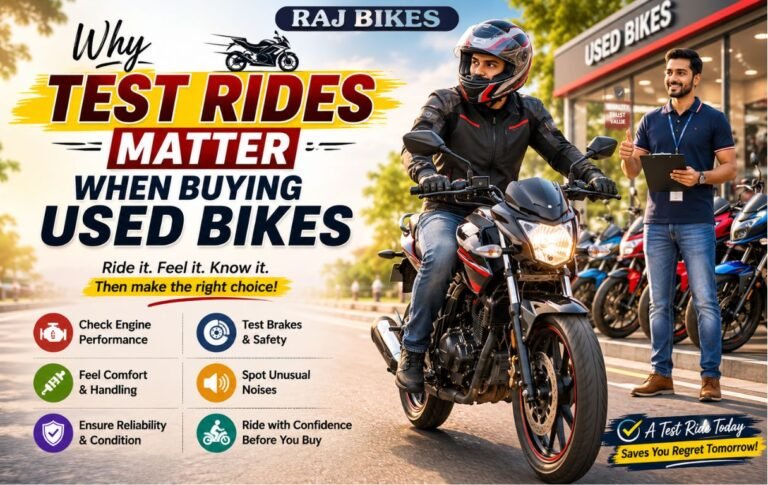
Never buy a pre-owned bike without taking a proper test ride. Evaluate the engine performance, clutch, gearbox, brakes, suspension, steering, and overall comfort.
Additionally, ride at different speeds to identify unusual vibrations, engine noises, or handling problems. A test ride often reveals issues that a visual inspection cannot detect.
10. Check for Accident History
Ask the seller directly whether the bike has been involved in any accidents. Then, inspect the body panels, fuel tank, paint finish, and frame for signs of repairs or repainting.
Although minor cosmetic repairs are common, major accident damage can affect the bike’s safety, performance, and resale value.
11. Verify the Insurance Status
Before completing the purchase, confirm that the insurance policy remains active. Also, review the policy’s validity period and previous claim history.
After buying the bike, transfer the insurance policy to your name immediately. This step protects you legally and ensures hassle-free ownership.
12. Compare the Market Price
Finally, compare the asking price with similar models available in the market. Consider factors such as the bike’s age, mileage, condition, service history, and accessories before making your decision.
As a result, you can negotiate confidently and pay a fair market price.
Common Mistakes to Avoid
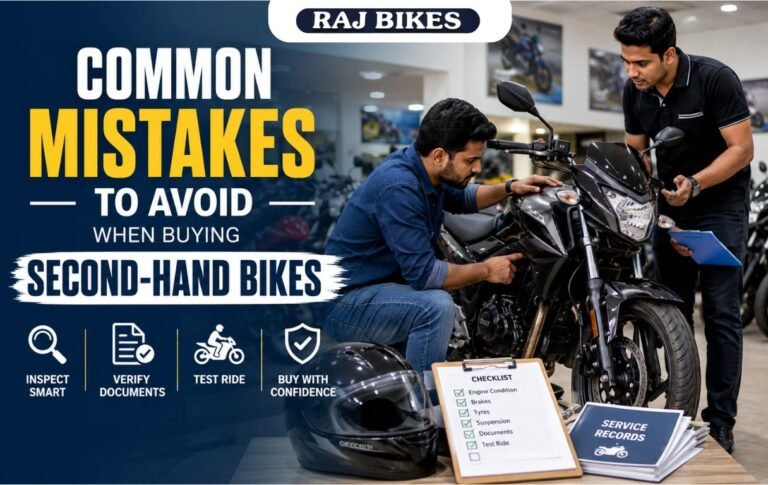
Many buyers make avoidable mistakes while purchasing a used bike. Therefore, avoid these common errors:
- Buying the bike without verifying its documents.
- Skipping the test ride.
- Ignoring the service history.
- Focusing only on the bike’s appearance.
- Forgetting to verify insurance validity.
- Accepting the first asking price without negotiating.
- Overlooking signs of accident damage.
Final Checklist Before Buying
Before making the payment, confirm the following:
- The Registration Certificate (RC) is genuine.
- The engine and chassis numbers match the documents.
- The insurance policy is valid.
- Service records are available.
- The brakes, tyres, suspension, and electrical components work properly.
- The bike performs smoothly during the test ride.
- The ownership transfer documents are ready.
Conclusion
Buying a pre-owned bike becomes much easier when you verify every important detail before making your decision. Instead of focusing only on the price, inspect the bike’s mechanical condition, legal documents, service history, and overall performance. Furthermore, take your time during the inspection and ask the seller every necessary question.
By following these essential verification steps, you can choose a reliable pre-owned bike with confidence, avoid unexpected repair costs, and enjoy a safe, smooth, and worry-free riding experience for years to come.